
The Number One Question We Hear From Homeowners
If you're considering a kitchen remodel in Plantation, the first question on your mind probably isn't about tile patterns or cabinet finishes. It's this: How long is this actually going to take?
It's a fair question. Your kitchen is the most-used room in your home, and being without it for an extended period can feel daunting. The truth is that a well-planned kitchen remodel follows a predictable sequence of phases, and understanding each one helps you prepare, set expectations, and avoid unnecessary stress.
Here's a realistic look at the typical kitchen remodel timeline, from the first planning conversation to the moment you cook your first meal in your brand-new space.
Phase 1: Design and Planning (2–4 Weeks)
Before anyone picks up a hammer, there's critical work happening behind the scenes. This phase includes:
- Initial consultation and measurements — Your contractor visits your home, discusses your goals, and takes detailed measurements of the existing space.
- Design development — Layout options are explored, materials are selected, and a design plan takes shape. This is when you'll choose cabinetry styles, countertop materials, flooring, fixtures, and appliances.
- Permitting — Depending on the scope of your project, building permits may be required in Plantation. Your contractor should handle this process, but permit approval can take anywhere from a few days to a couple of weeks.
- Material ordering — Custom cabinets, specialty countertops, and certain fixtures often have lead times. Ordering early prevents delays once construction begins.
This planning phase is where the entire project is won or lost. Rushing through it leads to change orders, delays, and budget overruns down the road. A good contractor will encourage you to take the time you need here.
Phase 2: Demolition (2–4 Days)
Once permits are approved and materials are ordered or on schedule, demolition begins. This is the most dramatic — and often the most unsettling — part of the process. Old cabinets, countertops, flooring, and sometimes walls come out.
During demolition, your contractor may also uncover surprises behind the walls: outdated wiring, plumbing issues, or water damage that wasn't visible before. A reputable remodeling company will communicate these findings immediately and discuss solutions before moving forward.
Pro tip: Set up a temporary kitchen station in another room with a microwave, coffee maker, and a small table. You'll thank yourself later.
Phase 3: Rough-In Work (1–2 Weeks)
This is the behind-the-walls phase that most homeowners don't think about, but it's one of the most important. Rough-in work includes:
- Electrical updates — Adding circuits for new appliances, relocating outlets, or installing under-cabinet lighting wiring.
- Plumbing modifications — Moving supply lines or drain locations if the sink, dishwasher, or refrigerator is being relocated.
- HVAC adjustments — Rerouting ductwork if the layout has changed significantly.
Inspections are typically required after rough-in work is completed. In Plantation, the local building department will need to sign off before walls can be closed up. Your contractor coordinates these inspections so you don't have to.
Phase 4: Cabinet and Countertop Installation (1–2 Weeks)
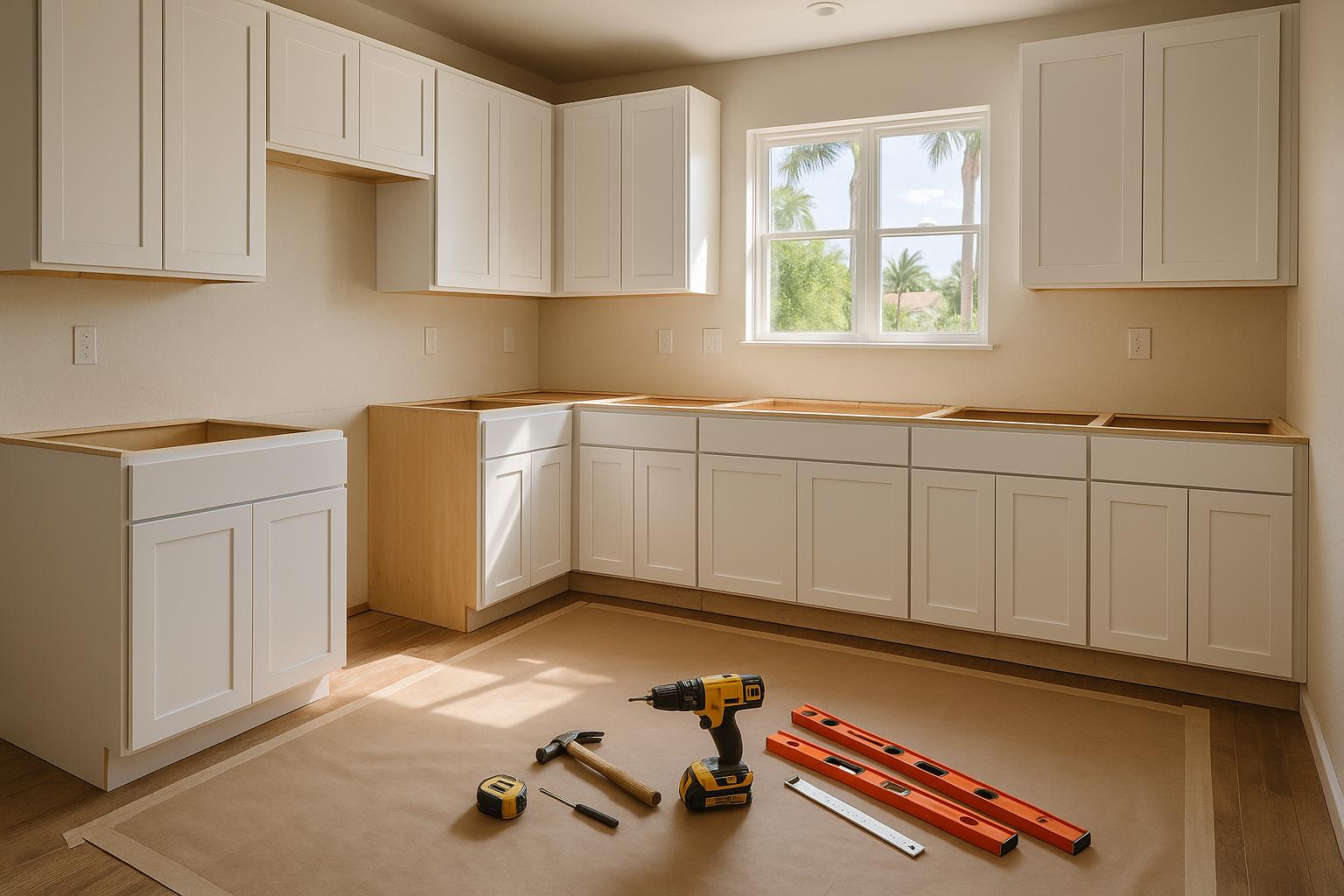
Now things start to get exciting. Cabinets are installed first, and they immediately transform the look and feel of the room. Once the cabinets are in place and leveled, countertop fabricators come out for final measurements — this is called templating.
There's typically a one to two week gap between templating and countertop installation, as your stone or quartz slabs are custom-cut at the fabrication shop. Many homeowners in South Florida are surprised by this waiting period, but it's standard practice and ensures a precise fit.
Phase 5: Finishing Touches (1–2 Weeks)
This final phase is where everything comes together:
- Countertop installation — The fabricated countertops are set in place and sealed.
- Backsplash tile — Tile is installed and grouted, adding personality and style to the space.
- Flooring — If new flooring is part of the plan, it's typically installed during this phase (though timing can vary based on the material and layout).
- Fixture and appliance installation — Sinks, faucets, lighting, and appliances are connected and tested.
- Painting and trim — Final paint touch-ups, trim installation, and any remaining detail work.
- Final inspection and walkthrough — Your contractor walks through the completed kitchen with you, addresses any punch-list items, and ensures everything meets your expectations.
So How Long Does a Kitchen Remodel Really Take?
For a typical full kitchen remodel in Plantation, you can expect the construction phase to last approximately six to ten weeks once work begins on-site. Add in the planning, design, and permitting phase, and the total project timeline from first meeting to final walkthrough is usually ten to sixteen weeks.
Several factors can extend or shorten this timeline:
- Scope of the project — A cosmetic refresh with new cabinets and countertops takes less time than a full gut renovation with layout changes.
- Material lead times — Custom or imported materials may require longer wait times. Choosing in-stock options can speed things up.
- Permit processing — Permit timelines vary, and delays at the building department are outside your contractor's control.
- Unexpected discoveries — Older homes in Plantation sometimes reveal hidden issues during demolition that need to be addressed before moving forward.
How to Keep Your Kitchen Remodel on Schedule
While your contractor manages the day-to-day timeline, there are things you can do as a homeowner to help keep things moving:
- Make decisions early. Indecision on materials, colors, or fixtures is the number one cause of delays. Finalize your selections during the design phase.
- Be available for questions. Your contractor will need your input throughout the project. Quick responses keep the momentum going.
- Trust the process. There will be moments when it looks like nothing is happening — waiting for inspections, material deliveries, or subcontractor scheduling. These pauses are normal.
- Communicate openly. If something concerns you, bring it up immediately. A good contractor welcomes your questions and keeps you informed every step of the way.
The Payoff Is Worth the Wait
A kitchen remodel is one of the most impactful investments you can make in your Plantation home. It improves your daily life, increases your home's value, and gives you a space that truly works for the way you live and entertain.
At Flint Building Contractors Plantation, we walk our clients through every phase of the process with clear communication, honest timelines, and craftsmanship you can see and feel. If you're thinking about remodeling your kitchen, we'd love to sit down with you and map out a realistic plan that fits your goals, your budget, and your life.